
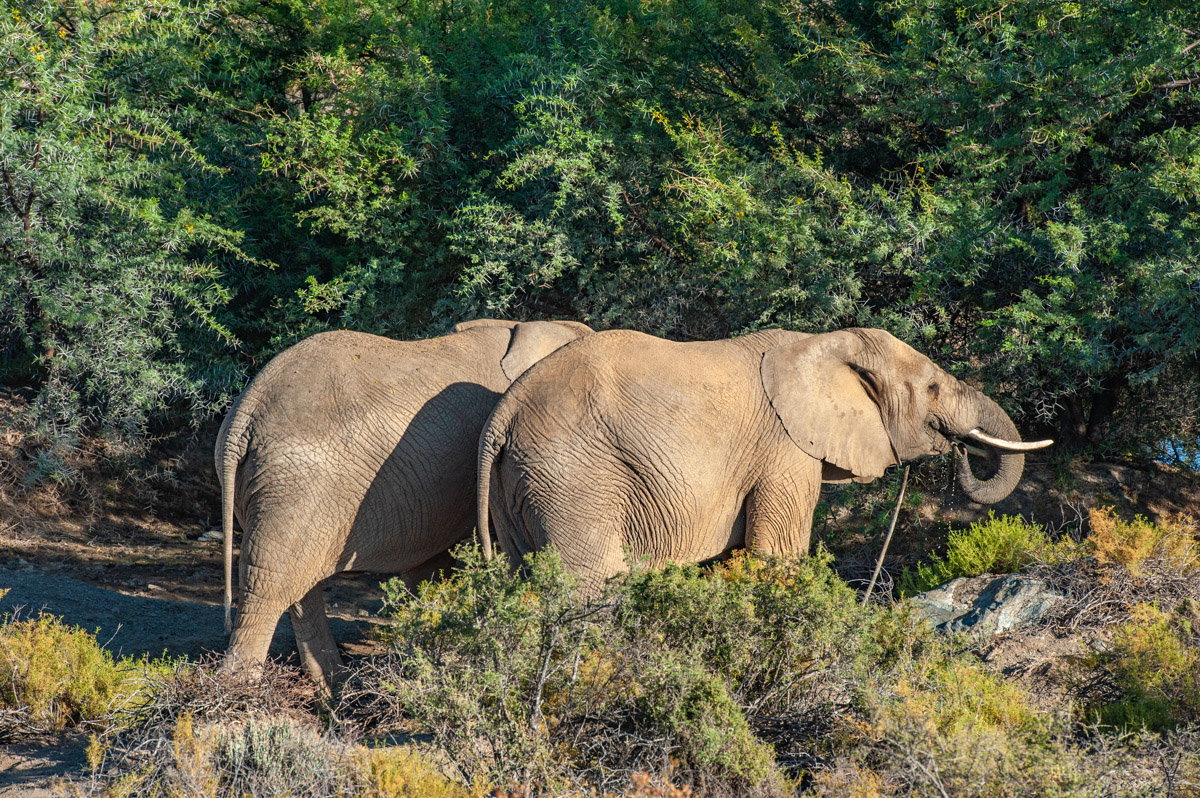
At Mont Eco Game Reserve, Elephants are far more than just members of the Big 5 – they’re intelligent, emotional, and socially complex animals that play a vital role in the Karoo ecosystem.
To gain a deeper understanding of their unique behaviour and place within the reserve, we caught up with our Head Scout. With over a decade of experience working in reserves and sanctuaries – and a special passion for elephants – he spends much of his time tracking and observing them in the wild. Thanks to his insights, we’ve come to truly appreciate the lives of these magnificent creatures.
Here’s what he had to share…
One of the most captivating aspects of elephant life is their strong sense of family and empathy. At Mont Eco, our scout has seen them caring for each other with incredible tenderness—especially when one from the herd is unwell. They’ll bring food to the sick and use tactile communication, gently touching one another with their trunks, to offer comfort and maintain connection.
Communication within the herd happens in subtle but powerful ways. Deep rumbles help them locate each other while feeding in dense bush, and physical touch reinforces their bonds. While elephants typically follow a matriarchal system, the herd at Mont Eco follows a slightly looser structure—the younger ones are protected whether they lead or stay in the centre.
Conflict in the group is rare and short-lived. The matriarch plays a key role, disciplining the youngsters and stepping in to mediate disputes, teaching the herd from a young age what’s acceptable. Over time, these early lessons help create a peaceful and cooperative dynamic.
Interestingly, the elephants have developed routines that reflect their familiarity with the reserve. They know exactly where and when to find food and water—visiting the riverbanks for branches or heading into the mountains to browse on Karoo plants.
The semi-arid climate of the Klein Karoo might seem harsh, but elephants are incredibly resourceful. The reserve’s natural vegetation, especially the sweet thorn (Acacia), is a favourite for elephants, offering both nutrition and familiarity. Their diet hasn’t required major changes, thanks to the abundance of indigenous trees like the karee boom and acacia.
Crucial resources such as year-round access to water, tree bark during drier months, and moisture-rich mountain plants keep them healthy. As the seasons shift, so too do the elephants’ routines—they instinctively know where to find hidden springs and greener patches.

At Mont Eco, conservation is at the heart of everything we do. We closely monitor the elephant herd to ensure their health and only intervene when absolutely necessary. We provide extra support during difficult times, such as droughts, and work to maintain a balanced, thriving environment. By involving local communities and practising sustainable methods, we help ensure these majestic animals continue to flourish.
Elephants in the Karoo face several challenges, including habitat changes, water scarcity during drought years, and the increasing impact of human development beyond the reserve’s protected boundaries. At Mont Eco, we work hard to address these issues by ensuring water sources are maintained throughout the year and supplementing their diet during the harsher seasons. We also collaborate closely with local farmers and conservation organisations to promote sustainable practices, while continuously monitoring the elephants’ movements and overall wellbeing to keep them safe and thriving within the reserve.
African elephants are the largest animals walking the Earth. Their herds wander through 37 countries in Africa. They are easily recognized by their trunk that is used for communication and handling objects. And their large ears allow them to radiate excess heat. Upper incisor teeth develop into tusks in African elephants and grow throughout their lifetime. There are two species of African elephants—the savanna (or bush) elephant and the forest elephant. Savanna elephants are larger than forest elephants, and their tusks curve outwards. In addition to being smaller, forest elephants are darker and their tusks are straighter and point downward. There are also differences in the size and shape of the skull and skeleton between the two species.
The number of African forest elephants fell by more than 86% over a period of 31 years, while the population of African savanna elephants decreased by at least 60% over the last 50 years, according to the assessments.
Despite the overall declining trend of both African elephant species, the assessments also highlight the impact of successful conservation efforts. Anti-poaching measures on the ground, together with more supportive legislation and land use planning which seeks to foster human-wildlife coexistence, have been key to successful elephant conservation. As a result, some forest elephants have stabilised in well-managed conservation areas in Gabon and the Republic of the Congo. Savanna elephant numbers have also been stable or growing for decades especially in the Kavango-Zambezi Transfrontier Conservation Area, which harbours the largest subpopulation of this species on the continent.
© 2026 Mont Eco Private Game Reserve. All Rights Reserved | Privacy Policy | Web Design by LDJ